





On the bluffs of the Missouri River in Kansas, Colonel Leavenworth established a post in 1927 that helped keep peace among warring Native American tribes. Over time, it became the second-oldest US army post west of Washington DC. However, it turned out to be better known as the intellectual nerve centre of the US Army.
The United States Army Command and General Staff College (CGSC) at Fort Leavenworth, Kansas, is a graduate school for the US Army, which selects military officers from around the world for its course. In 1967–68, Sundarji attended the prestigious Command and General Staff College at Fort Leavenworth in the US in 1967–68, as a part of the Senior Officers Preventive Maintenance Course at Fort Knox, Kentucky. In his report at the CGSC course in the US, Sundarji was rated highly and recommended fit to command a NATO army, the only Indian ever to have been rated this highly.
At Fort Leavenworth, he learnt how technology, mobility and speed in warfare needed to be studied in one spectrum. For an Indian officer attending a prestigious course in the US, it was both a discovery of new practices and a validation of his approach. The exposure to global ideas made an impression on his thinking about contemporary warfare. A story from that time illustrates the change in the way he understood complex issues.
In 1968, Sundarji was posted to the Infantry School Mhow as part of the directing staff on the Senior Officers Wing. Lt Gen Matthew Thomas had arrived on posting as an instructor at the Infantry School. He was introduced to his colleagues in the senior officers’ wing, which included Sundarji and other fellow officers. Colonel K. Sundarji had been assigned to write a paper and prepare a sand model discussion on the concept of attack in the mountains. “The paper was long overdue and Brig Dalbir Singh [the boss] gave him a final ultimatum,” wrote Thomas, about the assignment supposed to have been completed earlier.
With his back to the wall, Sundarji locked himself in his quarters and proceeded to write the paper. Over a diet of vintage alcohol, he produced a conceptual outline of the sand model exercise, considered an exceptional one, which stood the test of time in the institution. “Sundarji was undoubtedly a brilliant exponent of modern warfare. His thoughts on the conduct of modern warfare, that of free-ranging mech forces was well beyond his time,” Thomas testified to Sundarji’s considerable ability to focus and articulate complex thinking. ‘The arcane manner in which our WWII appreciations were thought-processed was anathema to his way of thinking of the parameters that could lead to a win–win situation. He believed and revelled in “out of the box” thinking.’
Alongside the exposure to global warfare, his takeaways from the two India–Pakistan wars shaped his thinking. His thinking formed an amalgam of strategic acumen and an understanding of manoeuvre warfare. Post the war of 1971, the country was about to make seminal changes in its warfighting machinery, and Sundarji was about to be a central part of that change.
After the 1971 war, Gen Bewoor would become the Indian army chief, succeeding Gen Sam Manekshaw. He brought with him the initiative to introduce mechanisation. After the war, India converted its II Corps, which had been raised prior to the war and played a role in liberating Bangladesh, into a strike corps by raising an armoured division in it.5 This involved drilling a breach in enemy defences using mechanised infantry and then exploiting the gap by driving in armour deep inside enemy territory and making the enemy retreat to protect its depth besides disrupting, destroying and defeating the enemy.
In the early 70s, the global landscape began to throw up lessons for militaries the world over. In the 1973 Yom Kippur War, an agile Israeli army exploited the battle space in quick time, ensuring that their attacking forces stayed nimble. Interestingly, their approach was similar to the German attack against Poland in 1939 that emphasised speed. The Arab–Israeli wars of 1967 and 1973 had influenced doctrinal thinking. India’s Ministry of Defence (MoD) in its Annual Report of 1973–74 observed, “We have, in this connection, to take note of the lessons emerging from the West Asia war of October 1973, which provided the proving ground for some of the newest weaponry.” These experiences led to a realisation that manoeuvre warfare comprising speed and mobility was an essential component to achieve favourable results.
In March 1974, Sundarji was promoted to the rank of major general. He took over command of an infantry division from February 21, 1974, to July 19, 1976. In 1976, in a departure from past practices, for the first time in history, an infantry officer took over command of an armoured division. He would go on to design the flamboyant all-black uniform of the Indian Armoured Corps. Relying on an instinctive bias in picking talent, Sundarji developed an intuition for recognising capable officers early, especially when he saw the spark and promise in young and senior officers alike.
Sometime before he was to take over command of his armoured division, he met young Col Harwant Singh in Ambala. They got along well in the short time they spent together. “His simple and easy manner made working with him great fun and a fulfilling experience. He would leave us to our own devices and when he was not around or on leave (even though in the station), he expected us to make decisions, no matter how important these may have been.”
Months later, Harwant was posted to War College, Mhow. Barely had he settled down when he received his posting order to the 1st Armoured Division, with Sundarji as its new commander. Sundarji had specifically asked for Harwant when he took over the command of the division. By then, Sundarji had acquired a reputation for being brilliant and plain-spoken. “He could not suffer fools and was impatient with sloth and inefficiency,” recalls Harwant. The last line resonates with several others across the length of his career.
On his way to joining the division, Harwant was filled with nerves and anxiety, “Maj Gen Sundarji, the General Officer Commanding of the division, was considered to be the brightest mind in the army and that filled me with apprehensions about my ability to keep pace with his speed and span of thinking and my capacity to measure up to his expectations.”
Upon presenting himself at the general’s office, Harwant noticed the friendly panache with which he carried himself. The hat worn at a rakish angle, he carried the swagger of a cavalry officer and the tenacity of an infantryman. Harwant instantly found himself at home.
A well-read man, Sundarji’s preference for discussions on technical matters and modern equipment in warfare constantly pushed Harwant and other officers towards learning new warfare technology and using innovative approaches. He made an impression on Harwant during his tenure with his instincts that challenged established mores of thinking. Once, when the higher command course delegation was to visit them, he presented to his boss the exercise he had written for the delegation. “My views on the employment of the armoured division in the setting of the exercise were at variance from his and we argued for a long time,” wrote Harwant of that exchange. Sundarji disagreed with Harwant.
“When he failed to demolish my point of view and convince me to his line of thinking, he threw in his trump card,” recounted Harwant. Sundarji told him that if Harwant’s viewpoint is to prevail, then he would have to conduct the discussion with the higher command course, but if Sundarji were to conduct it, then it will be the way he thought best. That put an end to the otherwise useful and informed discussion.
“I thought it was a bit of an unfair way to end it,” believed a disappointed Harwant of the exchange.10 The story has a tailpiece, though.
Years later, Sundarji approached him for an exercise, Brasstacks, that would trigger a fierce debate on how the exercise and its aftermath brought the two nations to the brink of war. During Brasstacks, Harwant was commanding a reorganised rapid division (RAPID) to test its competence in an operational environment. Harwant managed to get into a debate with Sundarji about the employment of the reorganised division. “The corps commander, the chief umpire and I held a similar view while Sundarji held the opposite stance,” wrote Harwant later.
What began on a note of discussion quickly turned into a debate and, thereafter, as the two sides remained obstinate with their views, the debate slipped into a heated exchange on professional lines. Seeing the unexpected turn towards an argument, the corps commander, chief umpire, chose to withdraw, leaving Harwant to take on the chief.
When Sundarji refused to budge on his line, Harwant decided to pay back. “I threw in my trump card. I told him that he had made a serious mistake in selecting me to organise, train and field the reorganised division in this big exercise.” Harwant’s statement caused a short pause of silence. Then, Sundarji roared with laughter, throwing himself back and shaking his head. Harwant remembers the moment, “With that characteristic twinkle in his eye, he told me to employ the division the way I wanted. So, I did, accomplishing all the assigned tasks and more.”
Around this time, Sundarji formed another defining relationship in Ambala. Sundarji was conducting a sand model discussion in the armoured division. Towards the end, he asked for comments from attendees. In the audience was Major Shamsher Mehta, famous for his heroics in the 1971 war. Mehta had led PT 76 tanks as a squadron commander across the mighty Meghna River and into Dhaka in the final battle in the 1971 war. Mehta raised his hand and went on to tell him that the plan being discussed would not work and offered his reasons for the disagreement. Sundarji’s response was quick and crisp: “In tactics, there’s nothing right or wrong. The real answers will come only in battle.” Officers around him told Mehta that his comment foretold the end of his military career. Two weeks later, Mehta got a call from Sundarji’s office. A surprise was in store: Mehta was asked to join Sundarji on his personal staff in 33 Corps, which also meant a promotion. This incident would begin Mehta’s long association with Sundarji, leading to him becoming Sundarji’s chief of staff. A voracious reader, Sundarji’s ability to argue his contention made him a tough one to convince, but he was known to encourage unafraid thinking in young officers, even when he disagreed with them.
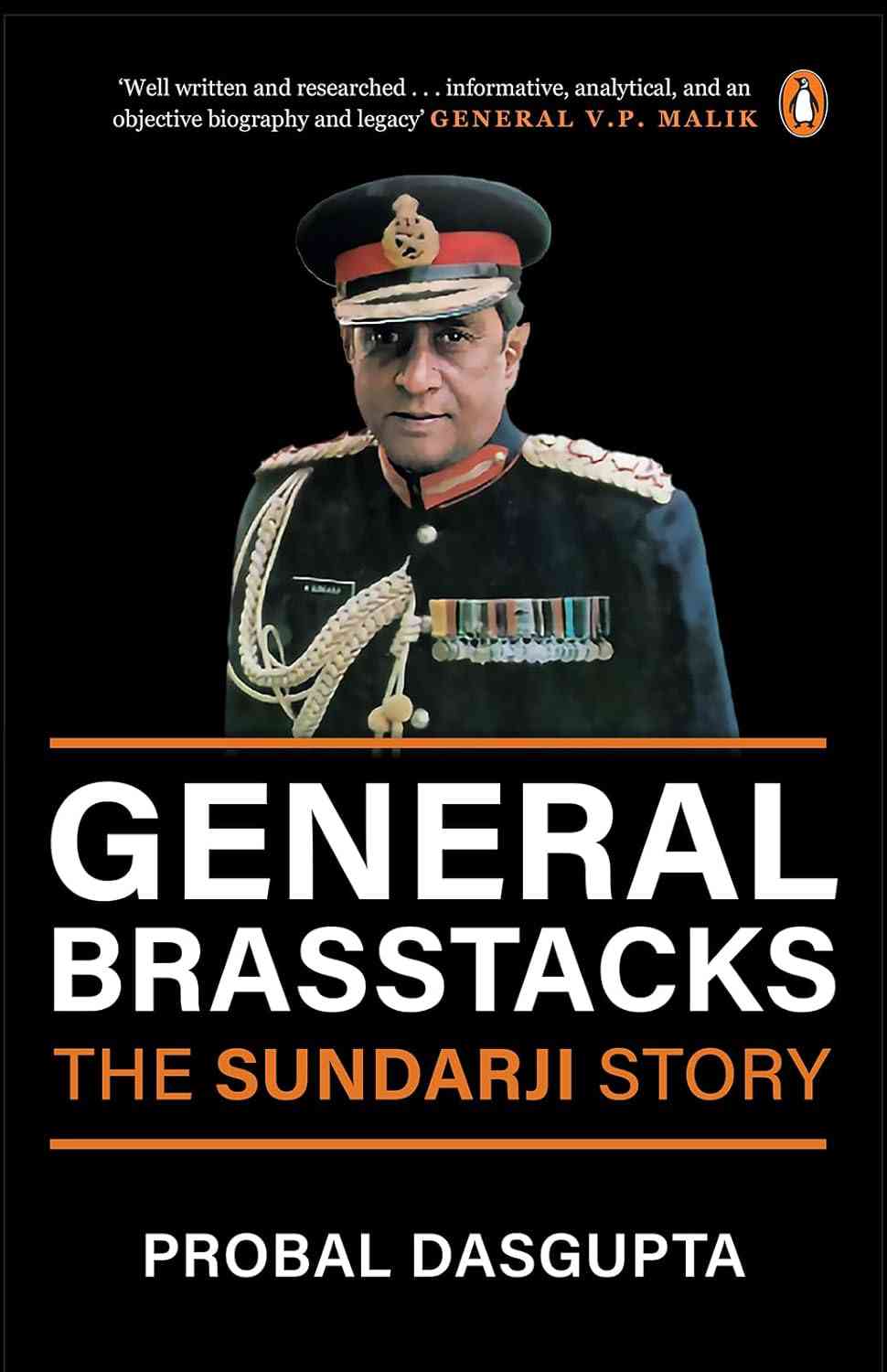
Excerpted with permission from General Brasstacks: The Sundarji Story, Probal Dasgupta, Penguin Random House India.
